Easiest Technical Business To Start
When I moved to New Zealand in 2019, I wanted to earn money on the side of my job.
A few mates back in The Netherlands did odd jobs on weekends like painting, carpentry and gardening. Earning a solid €500 on a Saturday. Good money for a day's work!
That sounded both fun and fulfilling. People paying you directly, not the company you happen to work for.
The problem? They were serving consumers with simple, visible tasks. Painting a neighbour's door. Fixing a bathroom. Planting hedges.
I was a project engineer working on complex, business-to-business projects that would take months. I couldn't see how to earn a quick €500 on a Saturday with those skills.
I wonder if more people struggle with this.
Specialised Skills Feel Like a Trap
You want to start something on the side. But your professional skills feel too complex to turn into quick cash.
You see others successfully running side businesses earning some decent coin. While you're hesitating because your professional expertise seems too complex.
So you do nothing. And that means:
- You miss out on extra income that could help with savings or lifestyle improvements
- The longer you wait, the less time you will have due to increasing life responsibilities
- Your specialised skills remain locked within your day job, limiting your growth
That's a waste. And it doesn't have to be that way.
The SOTOS Business Model
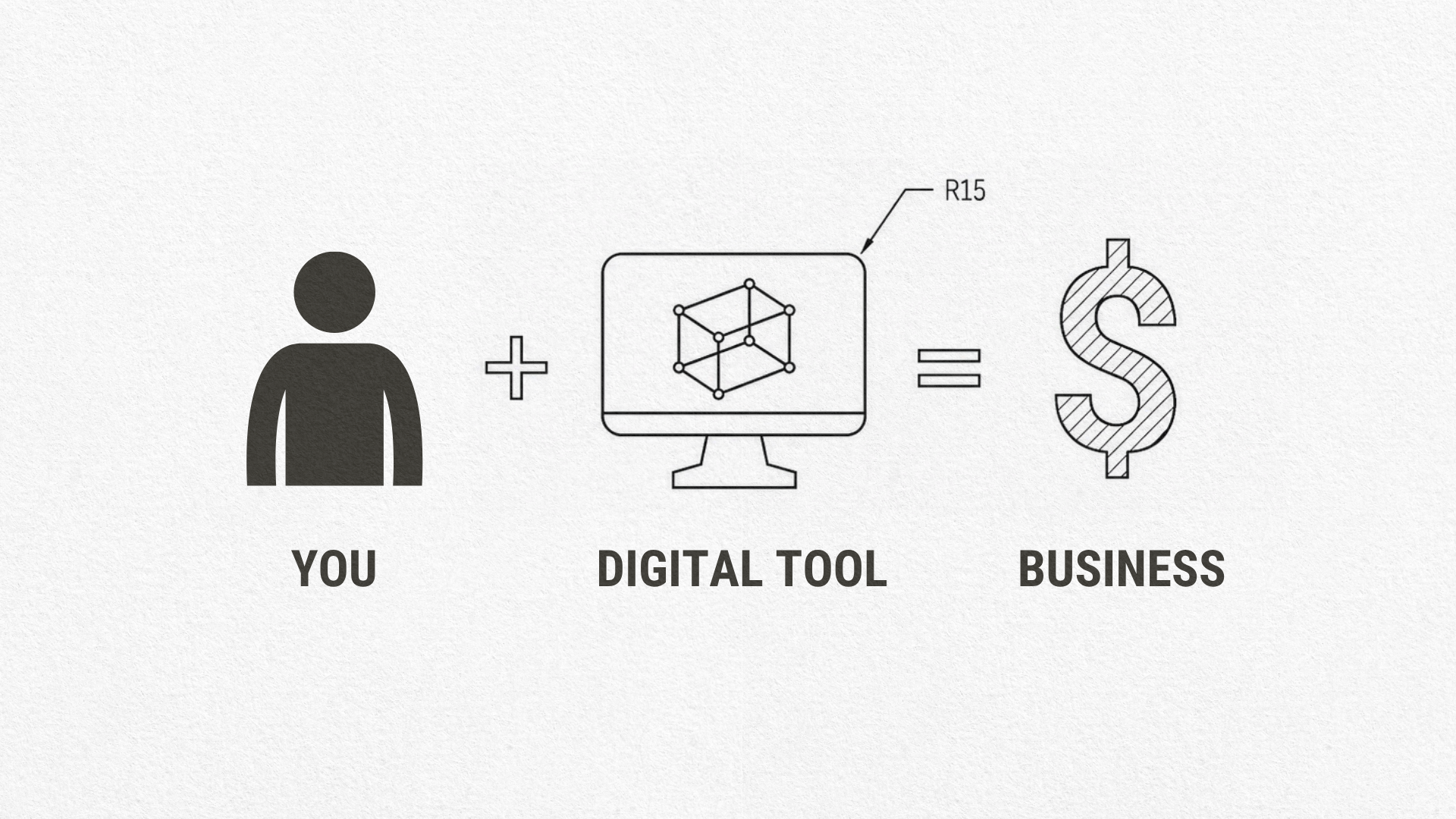
There's a business model that lets you turn specialised professional skills into a paid service. I've used it to earn on the side in several different ways. It's called the Service On Top Of Software model → SOTOS.
The idea is simple: you provide a service using existing software platforms and get paid for your expertise.
You pick something you're already good at. Find software that helps you deliver it better. Package it as a specific offer like: "I'll design your custom carport in 3D within 5 days for $X." Then go find out if people will pay for it.
Here's why it works so well:
- You don’t have to build something from scratch. Some corporations already did that for you
- Low start-up cost. Most software tools are inexpensive or free
- You focus on what you're already good at
- Software handles payments, delivery and sometimes even marketing
I've used this model in four different ways:
- Hosting guests on Airbnb
- CAD design work
- Project management
- Selling digital products
Each of those is its own story, worth reading separately (links below).
SOTOS Business Model Examples
For now, let's focus on the model itself.
The Timing Has Never Been Better
This business model has been a good opportunity for two decades, but right now it's bigger than it has ever been because of AI.
New AI tools are being added to almost every software platform at a pace that most people can't follow.
For younger professionals who grew up with fast-moving technology, adapting is pretty much normal.
For many experienced professionals and business owners, it’s overwhelming. They know what needs to be done, but they can’t keep up with all the new AI features that are added to all the well-known software tools.
That gap between what the software can do and what most people can do with it is growing fast.
This gap could be your opportunity.
If you stay up-to-date with the tools in your field, you become increasingly valuable. Not just as someone who can do the work, but as someone who can deliver it faster and more accurately than most. And that pays.
Why Clients Pay You Instead of Just Using the Software
I’ve heard this one a couple of times before: "Why would anyone pay me if they can just do the work themselves?"
Three reasons:
- They want results, not another learning curve. Most clients don't have time to master new tools. They just need the output.
- They value specialised knowledge. Every construction firm has CAD software with built-in calculators available. They still hire engineers. The tool doesn't replace the professional.
- Having the tool doesn't make someone a professional. A client with access to CAD software isn't a design engineer. You are.
YouTube has endless free cooking videos. Restaurants are still full. People pay for expertise and results. Not just access to tools.
How to Pick Your Software
Start by looking at what larger companies already use in your field, then find the same or an equivalent tool.
Big construction firms use CAD modelling software. You can use Inventor or AutoCAD too.
Large installers use project management platforms. You can use ClickUp or Notion too.
Marketing companies use design software. You can use Canva too.
And now most companies use AI in their workflow. You can use ChatGPT or Claude too.
Using the same tools as established companies makes you look professional fast. That professionalism builds trust, and trust is what sells your service.
If you can deliver something faster, with fewer errors you can earn money.
If you're not sure which tool fits your skill, a quick Google search of "[your industry] + software" is a solid starting point.
You can also ask an AI like ChatGPT: "What software do companies in [your field] use?" you'll get a solid shortlist in seconds. Most tools come with tutorials. Most are free to learn on YouTube.
But choose something that you already can work with or can learn fast.
What It Costs to Get Started
This is one of the biggest advantages of the SOTOS model, the barrier to entry is low.
Most software subscriptions have a free trials so you can try if your plan will work. After that they cost anywhere from ten to a few thousand euros per year.
Make sure you start with monthly payments first. You don't want to pay upfront for a year's cost before you've landed plenty of jobs.
Your main investment is time: learning the tool well enough to produce professional results, and packaging your offer clearly.
That's it.
Digital Leverage
What I like most about this model is that as a one-person operation, you can look and deliver like a much larger business.
That's what good software does for you. It's digital leverage: using tools to multiply your output, your professionalism and your impact without hiring a full team.
- Deliver faster
- Present more professionally
- Serve more clients without burning out
- Attract clients who might otherwise only work with large firms
You don't need a big team. You need the right tool combined with the right skill.